Posted on

Does electronic ignition stove have a pilot flame?

Customer

One more question: I couldn’t quite tell if the electronic ignition version is the same as the manual other than the igniter. Does it also have a pilot light? So if the igniter fails eventually, will I just have a manual version?

Outdoorstirfry

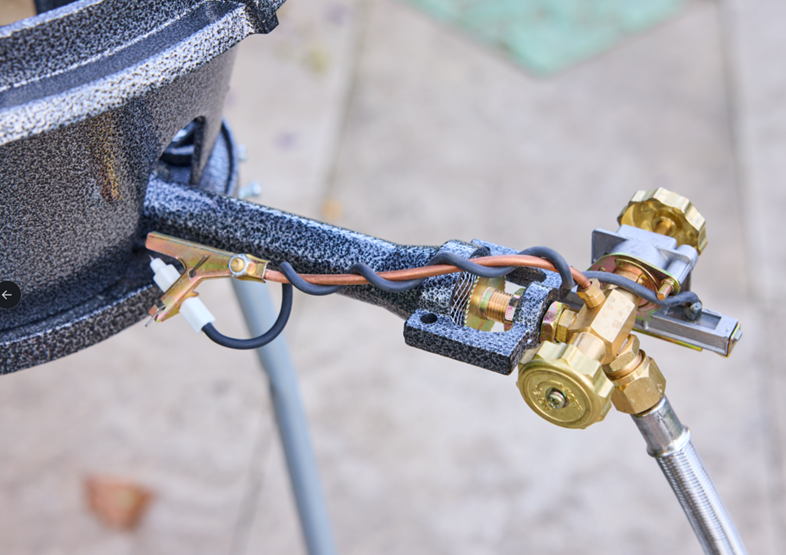
None of electronic ignition stoves has a pilot light.   The electronic ignition tip can NOT serve as a pilot light.   The ignition flame needs to be turned off after the main burner flame is lit.   Turning off the ignition flame is necessary to protect burning of the ignition wire.  Once the electronic ignition fails, you can use a long nose BBQ ignitor to ignite the main burner directly.   Between cooking dishes, you can turn down the main burner flame to preserve fuel.  

Posted on

Long leg stove to work with the stand?

Customer: 

Hello , can i put the 160 long leg wok in the stand,? I really like it

Outdoorstirfry: 

The long legs are detachable.  Once detached, the stove is a short leg version, ready to be inserted into the stand hole.   

Customer: 

That’s great news, i don’t plan to move this often, do u recommend the table for stability?

Outdoorstirfry:

The table only weighs 11lbs.  To our understanding, its bottom shelf will need to be weighed down with heavy object for better stability.   We have stabilizers for long legs that also improves stability of the stove. 

Posted on

Knob Modification?

Customer (PF13L160_Stabilizers): 

I just got a powerflamer 160 (propane, long leg with stabilizers, manual ignition)
Question 1: am I able to safely remove the gas adjustment knob and replace it with a lever of some kind ?
It is difficult to tell the power level of the flame by sight alone as I cook in broad daylight, yes I can hear the power of the flame but sometimes that’s not enough.
Question 2:
I have the long leg version. I see the metal table/ stand you sell in “accessories” if for the short leg version of the stove. Does that really matter? They appear to be the same would I be able to put my long leg stove (obviously without the legs) in the metal stand if I wanted to later on ?
Thank you !

Outdoorstirfry: 

The concern of changing the knob to any level is that the level tends to allow too much force into the shaft and the valve body.  This will wear out the valve much quicker, if not damage it at the beginning.  Can you draw marker (using a permanent marker) on the knob instead?

For fitting into the stand hole, you simply remove the long legs.  Without the long legs, the stove is a short leg version, ready to be inserted into the stand hole.

Customer: 

The permanent marker idea will work I was also thinking the lever would be more convenient flame adjustment but that’s ok.

One more question I watched the video concerning how to know when the flame power is too high I believe it was #2 on the list

May I ask why the design is this way where the flame backfires on to the gas line ? It seems very dangerous. Anyone could no watch that video and adjust their flame to full power not knowing the danger of that.

Outdoorstirfry: 

Good question.  The flame going downward is due to combination of raising too much power from the stove along with a wok on top of the stove blocking the flame upward.   Our latest stove design already improves this situation to our best, although we can’t guarantee for all woks out there.    This is why we warn at ship time. 

Posted on

Gap between wind guard and wok, needed?

Customer (PF13S160_Cover): 

Hi:  I just received Powerflamer 160 and when I placed my wok on it, there is a gap of 1/4 inch in between the bottom of the wok and the flame guard. My understanding is that there should be no gap between the flame guard and the wok. If so, can I grind the three wok holder a bit so that my wok sits perfectly without any gap. Please advise. Thank you.

Outdoorstirfry: 

No.  The gaps are for the flame to come around bottom of the wok.   If there is no gap, the flame will not have anyplace to go but burning the inner wall of the wind guard and be forced downward to burn anything outside of bottom area. 

Posted on

Burnt ignition wire and rusted screws.

Customer (PF13CL160EI_Stabilizers)

Hello,  Since about 6 months ago in April/May I have had a problem with the wire for the igniter having come off.  I don’t know how it happen, but I am thinking it is perhaps heat related? Perhaps the igniter is not positioned correctly and too close to the main burner.  I also see an issue with the screws being very rusty, and wonder if this will become a bigger problem later and I won’t be able to replace them if they have gotten too rusty.  Can you advice me on how to best fix these issues? I don’t mind doing it myself, but if you can guide me on which screw sizes to get, and the cable used for the igniter, I would appreciate it very much.

If I can buy the parts from your store, that would be an appreciated option as well.  I have attached some photos and a short video showing the issues.   Best regards.

Outdoorstirfry: 

Thx for your photos and video showing your concerns. 

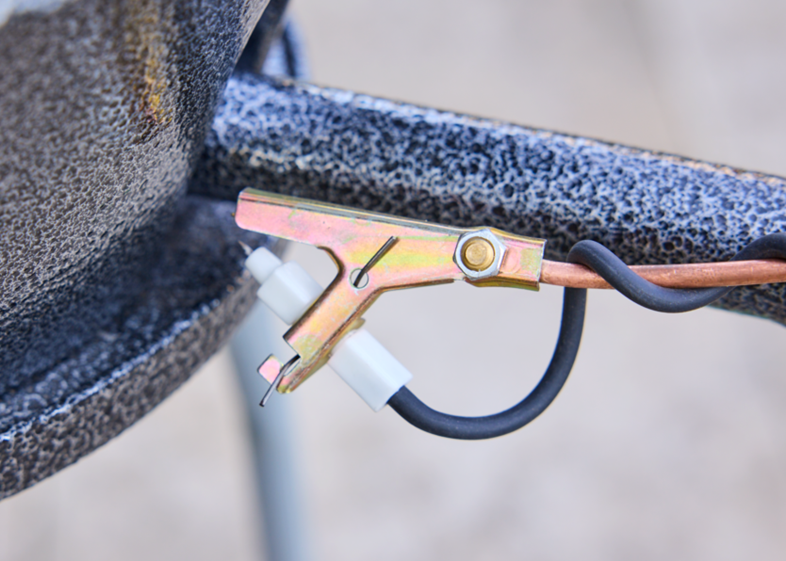
Regarding the ignition wire coming off from the white tip, please see attached on how to fix it. 

Regarding the rusted screw heads on top of main burner, your concern is thoughtful, those screws will need to be taken off if the burner top plate holes need cleaning.  Even if the top screw is rusted that a screwdriver is not helpful, there are two nuts at bottom of burner that can be loosened to get these two screws off.  Any new screws exposed to high heat will always rust.   We recommend leaving them as is. 

Posted on

Leg Stability and Ignition Position Questions?

Customer (PF13L160EI):  

 
Customer (PF13L160EI)

Hi –  Our team has been trying to shoot this wok for an article and have come across some issues.

They stated that the legs won’t stay in properly making it feel unstable. They also noted that the box came messed up, so are unsure if that is why the legs are a little wanky. They also discovered that the electric starter doesn’t reach the main bowl portion of the burner to light (about 4in short). I’ve included some photos for reference.

Is there any way to get a replacement sent?

long legs not spaced correctly
Ignition needs to bend back to top gently.


Outdoorstirfry: 

For leg stability, can you watch video #12 on https://outdoorstirfry.com/support/product-documentation/ “How to achieve stable long legs for PowerFlamer propane 160 stoves?  Flip the stove upside down, align the leg screw with the base plate flat surface, tighten the screw with a flat screw driver”?  Your supplied #1 picture shows that the long legs need to turn 180 degrees to make their distances on the ground wider for better stability.    Screws on the long leg adaptors also need to tighten to inner side of the baseplate short legs for better stability.    Inner sides of the baseplate short legs are flat, made for screw tightening.   

The igniter tip is better sitting outside of the stove wind guard.  The igniter wire (black) has insulation and can be burnt if the stove flame comes too close to it.  When ignition, the ignition flame can shoot quite far to top of the main burner.  It does not need to sit inside the wind guard.   The copper ignition copper tube (wrapped with the black insulation ignition wire) is flexible.  You can gently bend it back such that the tip is pointing toward top of the main burner.   

Installation guide is at https://outdoorstirfry.com/pfu_howtosetupyourpowerflamerelectronicignitionstovepropanegas18/.   Please reply if you have further questions.

Posted on

Tank connection in Norway

Customer (PF13L160EI_STabilizers_Cover): 

Hi,  Stirfyer is now operational and first very promising results. Excellent.

Just wanted to give you another feedback in case you get more customers from Norway. I was struggling to connect the fryer to the propane bottles here. A combination of your link below and some further googling solved the issue.

I solved by 

1) getting a bottle with industrial connector

2) connected to this adapter  https://www.maxfritid.no/produkter/gass–klima/gassinstallasjon/andregassdeler/overgang-propangasol-eurpol/?code=28203    which connects to the ‘German’ system.

3) connected that to the adapter from your link below (US-German)

4) and that to the fryer.

Took me some time to work this out, it may be of help to your other customers.  

Best.

Outdoorstirfry

Thank for your information on how to solve the connection.   Instead of having two adaptors, you might want to use one like Propane LP Tank Adapter POL x ACME QCC 1 Tank Adapter.  Best.

Posted on

Customer Feedback

Customer Feedback (Stand_Wheels and PF13S160_Cover): 

I’ve been using 160 with the stainless table for a few months.   I can’t tell you how impressed I am with it.  The temperature control is so easy and it certainly has the horse power.   It’s definitely a  quality piece of cooking equipment.  Plus, you were fantastic to deal with when I had an issue with the table.  

Anyone looking at this burner or you  should not think twice!  Thanks so much. 

Outdoorstirfry:  

Thank you for sending your review to us.  

Posted on

Question on 6B IEI stove.

Inquiry: 

Hello,  I have a number of questions about your 160k BTU Power Flamers. I’ve read through your FAQ and viewed your videos and appreciate the information sharing. I didn’t see answers to the below, so wanted to check with you:

I’d prefer a manual version of the 6B, but it sounds like the burner is not compatible.

Regarding parts for failed electronic ignition… I saw that you require the full assembly to be replaced on the IEI version. What are the current parts costs to replace a malfunctioning EI vs IEI version of the ignition, and how long do you plan to have parts available?

Is it fair to assume that you consider the 6B burner better performing for woking, over the 5B?

How do these wok burners hold up to year-round outdoor storage in a harsh climate like Denver, where we have vary variable conditions (large temperature swings, variable precipitation, wind/dust, etc) and high UV?

We have a lot of spiders where I live. How effective are the spider guards?

If I was to mount one of these into a 3rd party cart, how much clearance below the burner is needed (to a shelf, propane tank, or other materials) for safety and combustion air (assuming it has access to air from the sides?

Is the unit with short legs sufficiently stable sitting on a metal table when tossing (perhaps that would be too hot for a table), or does it need to be firmly attached to a base?  Many thanks.

Outdoorstirfry: 

IEI can default into a manual stove if its electronic ignition fails.  Turning the main burner flame to its lowest serves as a pilot. 

6B has wider burner area, we agree with the analysis from the customer who posted on reddit.  Our website has a copy of his analysis.

The stove main issue with weather is rust (moisture and direct rain/snow), not temperature, wind, dust or UV.   The stove needs to be covered after use. 

Spider is good to control inset populations.  We encourage spider populations.   We have lot of spiders in our place as well.  Spider guard, if placed correctly, is effective. 

We want minimum 1 foot clearance to any combustible material.  2 feet is preferable.

Short leg version is designed to sit on a table.  It does not need to be mounted to the table. 

Inquiry:

Ok, thanks.   Sometimes it’s nice to get confirmation beyond a single Reddit post, as different people have different experience. Glad to hear you think the new one provides a better woking experience.

As to the rust… is the concern more of an aesthetic concern or a functional/longevity concern for the unit? Some materials that rust are purely an aesthetic issue. I would definitely cover it, but given our drastic temperature swings (we can easily see freezing over night and 60 degreesF the next day), it can be expected there will still be condensation. I’d prefer to not be hauling it inside, as I don’t have space to store it.

Thanks for the information and for providing such good support of your product.

Outdoorstirfry:

Rust for most of the stove area is only cosmetic.  Rust in the burner holes affects the flame.  Flame becomes yellow and create soot.   We are in California.   We had to clean the holes on the burner twice last rainy season.  We have the stove for last 25 years and use it daily.    

Inquiry: 

Great – thank you! It’s good to understand the rust is maintainable where it can be problematic and there aren’t longevity issues.

I am going to order a PowerFlamer today… just need to choose IEI or manual. A few more questions, and I won’t pester you any more, as I am sure you are very busy! Sometimes it is hard buying things on the internet, because in-person things are more obvious.

– On the manual control… the knobs are brass. Do you know if they are lead-free brass?

– On the IEI control, you mentioned it can be turned low as a pilot light… Is there a detent/stop position before it turns off, or does it take some practice to get the flame at the lowest setting without it going out?

– I’m going to start looking for a larger cart today, that may have a shelf or cabinet below, like the one linked below. What is the dimension from the underside of the lip (i.e. where it would rest on the table) to the bottom of the unit, and how many inches of clearance below the bottom of the unit should be maintained for sufficient airflow?

https://www.amazon.com/gp/product/B0D2Q8JFM7

Outdoorstirfry: 

We don’t get material content on the brass fitting.  We need to assume that it has lead content that is not suitable for drinkable water usage.  The knob is not processing drinkable water from the stove application point of view.   The cook needs to wash hand before eating.

The travel of the front knob on IEI is 90 degrees.  There is no stop to indicate it reaches its minimal level.  Adjustment of the flame is continuous. 

On the table, you can let the stove sit on the table.  The short legs on the stove should provide enough air intake for the stove.  Are you going to cut a hole on the cart top surface to sink down the stove?

Inquiry: 

Thank you. I’m not always so good about not tasting food as I go, so I might be better off with the IEI, despite loving a more traditional control.

Yes, cutting a hole in the top would be the intent. Based on your comment, it sounds like as long as the legs are not touching down, I should be good for airflow. I think I’ve heard 10.75″ or 11″ diameter is the proper hole size? My wife is 5′-9″. Based on what I’ve read, it seems you prefer a 30″ height for the top of the unit. That seemed low to me, but after watching some videos, I can see where lower is better than higher for wok hei / tossing to not cause shoulder issues. 

Outdoorstirfry: 

Stir frying food is hot; you can’t use finger to grab them.  Please use utensil. 

With tossing, a good consideration is that your wok handle height is about the same height as your elbow or up to 6” lower.